From the Book Bin: Marlon James’s ‘The Disapearers’ Unsettles and Amazes
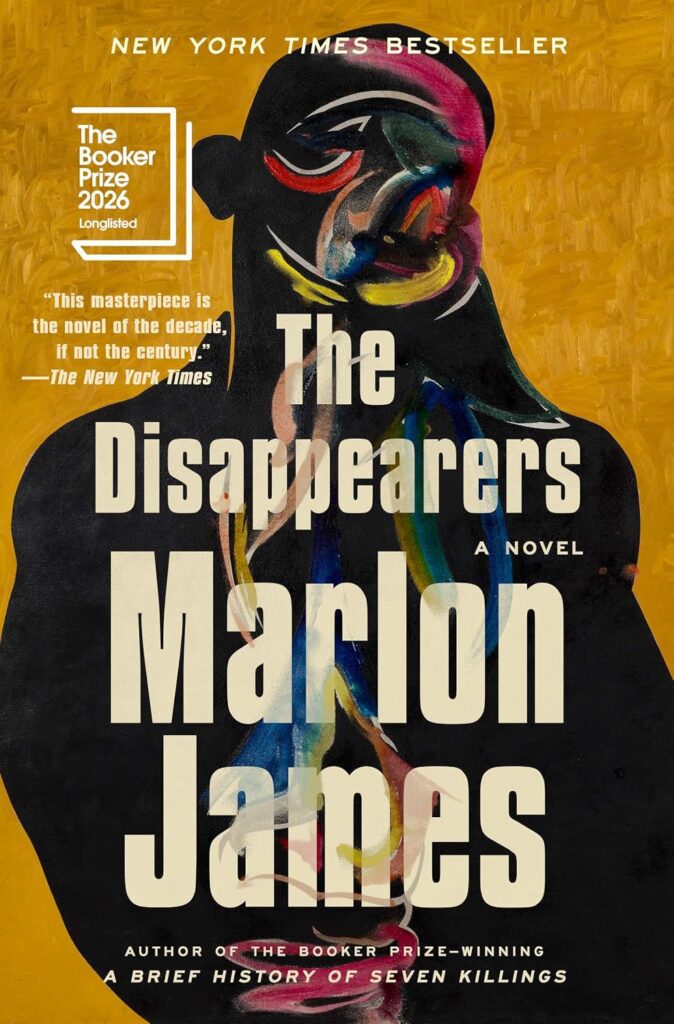
The Disappearers is a gut-punch and a celebration
“Marlon James’s story of gay experience and murderous homophobia in Jamaica is a maximalist’s banquet — and the Booker Prize winner’s finest book yet… The Disappearers places him near the front of the line, a decade or two from now, for the Nobel Prize.” —The New York Times
I haven’t reacted to a book this way since I first read Alice Walker’s The Color Purple on its release in 1982.
Marlon James returns to Kingston for the first time since A Brief History of Seven Killings, and the result feels like a writer working at the absolute height of his powers. What makes it extraordinary isn’t just the ambition of the structure; it’s how alive the prose is on the sentence level—Jamaican patois crackling against lyrical, almost operatic passages, dark comedy landing in the same breath as devastation. It’s the kind of book that earns comparisons to “the novel of the decade” without ever feeling like it’s straining for the title. Longlisted for the Booker and an instant bestseller, it’s the rare literary novel that is both formally daring and genuinely, viscerally moving—the kind of book you finish and immediately want to press into someone else’s hands.
Marlon James has spent nearly two decades proving he isn’t interested in writing the same book twice. The Jamaican-born author broke through with The Book of Night Women and John Crow’s Devil before winning the Man Booker Prize in 2015 for A Brief History of Seven Killings, a sprawling oral history of the attempted assassination of Bob Marley. He then swerved entirely into fantasy with the Dark Star Trilogy—Black Leopard, Red Wolf, Moon Witch, Spider King, and White Wing, Dark Star—an African-mythology-steeped epic that showed he could world-build as ferociously as he could write literary realism. James teaches at Macalester College and has never been shy about drawing on his own life—growing up closeted in Jamaica informs The Disappearers directly, giving the novel’s fury and compassion the weight of something lived, not just imagined.