-
Where Do Gays Retire Podcast: Retiring in Akrata, Greece: 60% Cheaper Than Orlando (YouTube)
NOTE: Text to speech function is only for the content of this post. Watch the podcast on YouTube.
Jeffrey Davidson and Walter Zak had never set foot in Greece until a cruise for their thirtieth anniversary in 2024. A year later, they bought a house on the Gulf of Corinth, largely sight unseen, and left Orlando after more than thirty years. Today they live in a stone village up an olive-covered mountain, and they spend about 40% of what Florida cost them. In this episode, they walk through the numbers, the Greek golden visa, healthcare at $220 a month for both of them, and what it actually feels like to be an out gay couple in the most religious country in Europe. They are also honest about who this move is not right for.
Hosted by Mark Goldstein
Guests: Jeffrey Davidson and Walter Zak, Akrata, GreeceWHAT YOU’LL LEARN
💰 Why their total cost of living dropped by roughly 60%
🏡 What 400,000 euros bought them on the Gulf of Corinth
🛂 How the Greek golden visa works, and the three investment tiers
🏥 Public healthcare for about $80 a year per person
🌈 LGBTQ+ life in a village, and why Athens is only 70 minutes away
🚶 Whether you can manage without a car
🛡 Safety, petty crime, and living somewhere without guns
🍴 Greek dining culture and why nobody eats before nine
🌤 Winters, earthquakes, wildfires, and how Greek houses are built
🌟 The honest trade-offs, including what they still cannot buy
-
Savvy Senior: Helping an Older Parent Cope with Loneliness

By Jim Miller
Dear Savvy Senior,
My 78-year-old father has lived alone since my mother passed away two years ago. He insists he’s fine, but I can tell he spends most of his time by himself and seems increasingly lonely and withdrawn. What can I do to help him, and are there any resources that could support him?
–Worried Son
Dear Worried,
You’re right to pay attention to this. The loss of a spouse often leads to increased isolation in older adults, even when they insist they’re fine. But long stretches without meaningful contact can take a real toll on both emotional and physical health.
Public health research shows that about one in three adults age 50 and older reports feeling lonely at times, and those who live alone are at higher risk for social isolation. But loneliness isn’t always easy to spot, especially in older adults who live alone.
The good news is there are practical ways to help your father reconnect, along with programs and services designed specifically for older adults living alone.
-
This Week’s Journaling Theme: It’s About Time
It’s About Time
We measure time in calendars and clocks, but we live it in moments: the smell of a kitchen, a voice on the phone, the way light shifts in the course of a day. This theme asks you to look at time not as something that slips away, but as something you’ve been gathering all along.
- The Story In Your Hands
Take a few moments and look at your hands. Notice the lines, the knuckles, any scars, spots, or rings. Then write about what these hands have done over the years: the work, the people they’ve held, the things they’ve built or let go of. What story of your life do your hands tell?
- The People Who Marked Time
Some people mark the chapters of our lives: the friend from a certain decade, the neighbor who was always there, the person we lost too soon. Write about one of them and the stretch of time they belong to. How does remembering them bring that time back?
- Small Rituals, Long Years
Think of a habit or ritual you’ve kept for years: morning coffee, a holiday tradition, a walk, a phone call every Sunday. Trace it back to its beginning. How has it changed as you’ve changed, and what does it hold for you now?
- The Age I Am
Write honestly about the age you are today. What does it feel like from the inside? What do you know now that only time could teach you, and what are you still learning?

-
‘Devil’s Wood’ Reading at Read Mill Books in Clinton, NJ
On a recent afternoon at Read Mill Books in Clinton, New Jersey, the story was told of a cursed walking stick and the lives it has destroyed, as it tries once again to ruin a man and all he holds dear. Mark McNease’s supernatural chiller, Devil’s Wood, held an audience’s attention with chills, mystery, and the ancient battle between good and evil. Read it to find out which one wins.
-
Tech Talk: When a Voice Is Deceiving – AI Clones and Scam Calls
The phone rings at 11 p.m. It’s your nephew, and he’s crying. He’s been in a car accident. He’s in trouble with the police. He needs bail money right now, and please don’t tell his mother.
It’s his voice. His exact voice. The way he says your name.
It isn’t him.
We’ve been warned for years about the “grandparent scam,” where a stranger calls pretending to be a grandchild in trouble. A careful listener could usually tell something was off. Not anymore. Scammers can now clone a voice with artificial intelligence using just a few seconds of audio: a Facebook video, an Instagram clip, a voicemail greeting. If someone you love has ever spoken on the internet, a scammer can copy their voice in minutes.
And this isn’t just a problem for older people. These fakes fool tech-savvy thirty-year-olds. In one widely reported case, a company employee sent about $25 million after a video call with what looked and sounded like his boss and colleagues. Every one of them was a fake.
How the scam works
The details change, but the pattern doesn’t:
- A familiar voice in a panic. A grandchild, a partner, an old friend.
- An emergency. An accident, an arrest, a hospital, a kidnapping.
- Urgency and secrecy. Act now. Don’t tell anyone.
- A strange way to pay. Gift cards, wire transfers, cryptocurrency, payment apps, or cash handed to a “courier.”
That last one is the giveaway. Real police and hospitals don’t take payment in gift cards.
Scammers aren’t counting on you being foolish. They’re counting on you being loving. When you hear someone you care about in distress, you act before you think. The trick is to build in a pause ahead of time.
-
Health Beat: An Ounce of Prevention – Protections for Married and Unmarried Couples
NOTE: This is a long one, but very important.
Many of us remember the stories, and some of us lived them. In the 1980s and ’90s, men sat in hospital waiting rooms while their partners of twenty years died down the hall, because a nurse said “family only.” Women watched a partner’s parents, who hadn’t spoken to their daughter in a decade, fly in, take over, and shut them out of the room. Homes were lost. Funerals were planned by strangers. Partners were left off obituaries.
A lot has changed since then. Same-sex marriage has been legal nationwide since 2015, and the federal Respect for Marriage Act in 2022 added another layer of protection. Hospitals can’t legally bar the people we love from our bedsides. But the paperwork still matters, and for many of us it matters more than it does for anyone else.
Here’s why, and what to do about it.
If you’re married
If you’re legally married, you’re your spouse’s next of kin. In every state, a spouse is first in line to make medical decisions when a patient can’t speak for themselves. That’s a huge change from the world many of us came out into.
Still, don’t stop there. A few reasons:
- Not everyone gets the memo. A staff member may hesitate, especially in an emergency, in a small-town hospital, or when you’re traveling. Having a health care proxy on your phone ends that conversation fast.
- Family can still make trouble. If your spouse’s relatives never accepted your marriage, a clear proxy and living will make it much harder for them to challenge your decisions or your spouse’s wishes.
- Peace of mind. Many of us carry a quiet worry about how secure our rights really are. Putting everything in writing means you aren’t relying on any single law to protect you.
If you’re partners who never married
Plenty of us chose not to marry. Some had been together so long it felt beside the point. Some had financial reasons, like pensions or benefits. Some simply didn’t want the government in their business after decades of it saying no.
That choice is yours. But know this: without paperwork, an unmarried partner has no automatic legal right to make medical decisions for you. When a patient can’t speak, most states turn to a default list: spouse, then adult children, then parents, then siblings. A few states include “close friend” at the very bottom, and some don’t include partners or friends at all.
-
Savvy Senior: When Home Care Isn’t Enough
Savvy Senior
by Jim Miller
Dear Savvy Senior,
My mother has several chronic health conditions and needs a home caregiver to help with daily activities. I know she wants to stay at home as long as possible, but how do I know when it’s time to consider an assisted living facility or nursing home?
–Exhausted Daughter
Dear Exhausted,
Most older adults hope to remain in their own home as long as possible, and with the right support many can. But there may come a point when home care is no longer enough to meet a person’s medical, safety or social needs. While moving to an assisted living facility or nursing home is never easy, recognizing the warning signs early can help you avoid a crisis and make the transition less stressful.
If you answer “yes” to several of the following questions, it may be time to start exploring other care options.
Is home care becoming too expensive?
Eight to 10 hours of care a day, seven days a week, can easily cost $100,000 a year or more. That’s well above the median annual cost of a one-bedroom assisted living apartment (about $70,000), though still less than a private room in a nursing home (about $128,000), according to Genworth’s Cost of Care Survey.
-
The Twist Podcast 341: Slava Ukraine, Unfunny Comics, and Our Twist Election Hot Takes
Join co-hosts Mark McNease and Rick Rose for an election special. Plus we stand with Ukraine, and demolish “Comedian” Shane Gillis.
-
New from Your Write Path: Your Life, Your Story, Your Legacy
Your Life, Your Story, Your Legacy
Every life holds a story worth keeping, and too many are lost because we didn’t write them down. With Life Writing, I help people turn their memories into a finished book their families can hold, share, and pass down for generations.
After facilitating journaling and writing workshops for the past three years, I’m now offering to help you get your legacy down on paper. If you’d like to include photos, audio of you own narration, and even video, consider reaching out.
As a two-time Emmy Award–winning writer, author of fifteen novels, and a Certified Guided Autobiography Instructor, I’ve spent my career shaping stories. I’m still an author, still a workshop guide, and still here for whatever you’d like to accomplish.
From First Idea to Finished Book
With patience and time, listening carefully to what you want, I’ll guide you through every step:
- Finding your story. Together we explore the memories, people, and turning points that matter most, and uncover the themes that tie your life together.
- Building the outline. We shape those memories into a clear structure, so the project feels manageable instead of overwhelming.
- Writing it down. Write it yourself with my coaching and feedback, or let me help draft it from our conversations, in your voice.
- Editing and polishing. Careful editing makes your story read smoothly while keeping it unmistakably yours.
- Creating the book. I’m able to handle design, cover, and publishing through my own imprint, so you end with a real, professionally printed book, whether you want 10 copies or 50. It’s your story, and your choice.
Whether you want to preserve family history, share hard-won lessons, or simply make sense of the road you’ve traveled, you don’t have to do it alone. Your life is a story, and you’re the storyteller.
Let’s Begin
Contact me through through Your Write Path to talk about your legacy book.
-
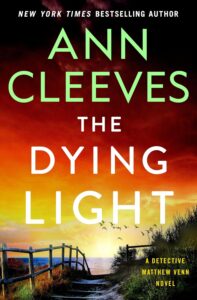
From the Book Bin: Ann Cleeves’ Matthew Venn Returns in ‘The Dying Light’
The Dying Light
Publisher : Minotaur Books
Publication date : September 29, 2026
Print length : 384 pagesI’ll admit to not having read an Ann Cleeves book before the first Matthew Venn mystery or even seen one of the ubquitous BritishTV shows based on her stories. Having a gay detective in a mainstream mystery got my attention, and I ‘ve looked forward to each book in the series. The newest doesn’t disappoint.
Some background on Cleeves: She’s given us two of the most-loved detectives in British crime fiction. Vera Stanhope and Jimmy Perez of Shetland both made the leap from page to screen and found devoted audiences. With The Dying Light, the fourth book in her Matthew Venn Two Rivers series, she brings back the quiet Detective Inspector Matthew Venn, and the result is one of the most absorbing entries yet.
The Story
It’s the height of a punishing heatwave in North Devon, England. A young woman named Lottie is found dead in the swimming pool of Tide House, a luxurious holiday home. Her best friend, Hannah, is missing. The house belongs to Hannah’s father, Paul Armstrong, a rising political star, and the press descends almost immediately.
The two girls had come to Devon to celebrate the end of their exams, and they hadn’t made many friends. They disrupted a folk music festival on a neighboring farm and mocked the locals in videos they posted online. That gives Venn a long list of people with a grudge, and a community that has no intention of making his job easy. As the heat builds and a second tragedy strikes, Venn and his team find that some of the holidaymakers have closer ties to the Armstrongs than anyone admitted.
Cleeves is a master of the closed-community mystery, and she uses the festival, the farm, and the holiday crowd to set locals against outsiders. The suspects are many and plausible, and the ending lands with a genuine surprise.