LGBT Senior’s Health Beat: A Bicycle Built for You – Bike Riding for Older Adults
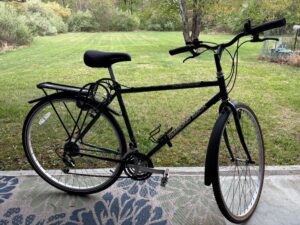
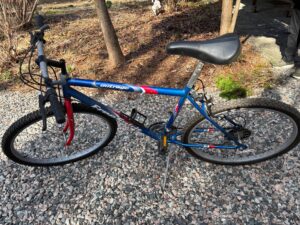
Once upon a time we had two bikes in the garage at our New Jersey house we came to on weekends. Since moving here full time eight years ago, we’ve dropped it to a single bike that is rusting in a shed. After promising myself for several years that I’d get a new bike and start riding around the country roads just outside our door, I finally did it! Luckily it’s a used bike in good condition that was given to me by some friends. I’d mentioned I was going to buy one, and they said they had two they never use. Voila! We both have new bicycles, and when the weather finally cooperates I’ll be seen gliding around the back roads with a helmet and a smile. Speaking of which, let’s take a look at some sage bike advice.
There’s no age limit on the open road — just a few things worth knowing before you roll.
Maybe you haven’t been on a bike for a while. Maybe you saw someone pedaling through the neighborhood on a crisp morning and thought, “I used to do that.” Or maybe your doctor mentioned low-impact cardio and your mind went straight to that bicycle sitting in the garage, tires soft, waiting.
Whatever brought you to this decision, welcome. Getting back on a bike or starting for the first time is one of the genuinely good decisions we can make for our bodies, our moods, and our sense of freedom. And the good news is that bikes, helmets, and the culture around recreational cycling have all gotten a lot more welcoming to older riders. We just need to know where to start.
FINDING THE RIGHT BIKE
The single most important thing we can do is get the right bike for our bodies and our goals. Riding the wrong bike is uncomfortable at best and discouraging at worst.
Step-through frames are your friend. Traditional bikes require you to swing your leg up and over a high top tube. That’s fine when you’re 30. It’s a recipe for a tumble when your hips have other opinions. Step-through frames, once called “women’s bikes,” though they belong to everyone, have a low or absent top tube, making it easy to get on and off. No gymnastics required.
Consider an e-bike. Electric-assist bikes have transformed cycling for older adults, and there’s no shame in the boost. A pedal-assist e-bike doesn’t do the work for you — it amplifies what you put in, which means you can tackle hills, cover more distance, and ride longer without arriving home wrecked. Many riders in their 60s, 70s, and beyond swear that an e-bike gave them back cycling entirely.
Think about your riding position. Hunching over drop handlebars may look fast, but it’s hard on your back, neck, and wrists. Look for upright or comfort-oriented handlebars that let you sit relatively straight. Hybrid bikes and comfort cruisers are designed exactly for this. Your spine will thank you.
Get fitted, not just sold. A good local bike shop will size you properly — seat height, reach, frame size. This matters more than brand or color. A bike that fits prevents the aches and pains that send people back to the couch. Don’t buy online if you can help it; go somewhere a human being can watch you sit on the thing.
Other features worth considering:
- Wider, cushioned saddles for comfort on longer rides
- Tires with a bit more width for stability (1.75” or wider)
- Handlebars with good grips or ergonomic grip tape
- A low gear range for hills
- A rear rack if you plan to carry anything
THE HELMET CONVERSATION
Wear one. Full stop.
But since you’re still reading, here’s the fuller picture: head injuries from cycling are serious, preventable, and they don’t care how experienced you are. You can fall at two miles per hour in a parking lot and sustain a traumatic brain injury if your head hits pavement. Helmets reduce that risk dramatically.
What to look for in a helmet:
Look for the CPSC (Consumer Product Safety Commission) certification label inside — that’s the US safety standard. Beyond certification, fit is everything. A helmet that tips back or rocks side to side is not protecting you. When properly fitted, a helmet should sit level on your head about two finger-widths above your eyebrows. The straps should form a V just below your ears, and the buckle should be snug under your chin with room for one finger. If it wobbles when you shake your head, it’s too loose.
MIPS technology — Multi-Directional Impact Protection System — is now widely available at reasonable price points and offers additional protection against rotational impacts. Worth it if it fits your budget.
Helmets should be replaced after any significant impact, and every five to seven years regardless (the foam degrades over time). If your helmet is from the Clinton administration, please retire it.
SAFETY ON THE ROAD (AND TRAILS)
Starting slow and smart is not timidity — it’s wisdom.
Begin somewhere low-stakes. A quiet neighborhood street, a paved rail trail, a park path. Get comfortable with starting, stopping, shifting, and signaling before you venture into traffic. Your muscle memory will come back, but give it time.
Relearn hand signals. Left arm out means left turn. Left arm bent up at the elbow means right turn. Left arm bent down means stopping. These are your language with drivers, and drivers appreciate being spoken to.
Be visible. Wear bright colors. Add a blinking rear light — even in daylight. A white headlight is required by law in most states after dark and smart anytime visibility is limited. Being seen is more valuable than being fast.
Follow traffic laws. Ride in the same direction as traffic. Stop at red lights and stop signs. Use bike lanes where available.
Watch for the hazards older riders mention most:
- Car doors opening suddenly (“dooring”) — give parked cars a door’s width of clearance
- Gravel, sand, or wet leaves on pavement — all can send you down before you know it
- Railroad tracks and grates — cross them at a perpendicular angle, never parallel
- Turning cars — make eye contact with drivers before proceeding through intersections
Ride with someone when you’re starting out. A companion provides confidence, company, and someone to call for help if something goes wrong. Many communities have cycling clubs with group rides specifically for recreational and beginner riders.
A FEW THINGS FOR YOUR BODY
Cycling is low-impact, but your body still deserves preparation and recovery.
Start shorter than you think you need to. Ten or fifteen minutes is a real ride when you’re just starting. Build gradually. Soreness in unusual places — especially the saddle area — is normal at first and fades as you condition.
Hydrate. Older adults are often less sensitive to thirst signals, so drink before you feel thirsty, especially on warm days.
Stretch. A few minutes of hip flexor, hamstring, and lower back stretching before and after a ride keeps things moving smoothly.
Tell your doctor. If you have heart disease, balance issues, osteoporosis, or are on medications that affect coordination or blood pressure, a quick conversation with your physician before your first ride is the sensible move.
ONE LAST THING
The first time you roll out and feel the wind — that particular combination of motion and air and the slight hum of wheels on pavement — something is going to click. It’s going to feel familiar in the best way.
You’re not “getting back into biking.” You’re just picking up where you left off, with a little more wisdom and a much better helmet.
Ride easy. Look up. Enjoy it