-
Health Beat: An Ounce of Prevention – Protections for Married and Unmarried Couples

NOTE: This is a long one, but very important.
Many of us remember the stories, and some of us lived them. In the 1980s and ’90s, men sat in hospital waiting rooms while their partners of twenty years died down the hall, because a nurse said “family only.” Women watched a partner’s parents, who hadn’t spoken to their daughter in a decade, fly in, take over, and shut them out of the room. Homes were lost. Funerals were planned by strangers. Partners were left off obituaries.
A lot has changed since then. Same-sex marriage has been legal nationwide since 2015, and the federal Respect for Marriage Act in 2022 added another layer of protection. Hospitals can’t legally bar the people we love from our bedsides. But the paperwork still matters, and for many of us it matters more than it does for anyone else.
Here’s why, and what to do about it.
If you’re married
If you’re legally married, you’re your spouse’s next of kin. In every state, a spouse is first in line to make medical decisions when a patient can’t speak for themselves. That’s a huge change from the world many of us came out into.
Still, don’t stop there. A few reasons:
- Not everyone gets the memo. A staff member may hesitate, especially in an emergency, in a small-town hospital, or when you’re traveling. Having a health care proxy on your phone ends that conversation fast.
- Family can still make trouble. If your spouse’s relatives never accepted your marriage, a clear proxy and living will make it much harder for them to challenge your decisions or your spouse’s wishes.
- Peace of mind. Many of us carry a quiet worry about how secure our rights really are. Putting everything in writing means you aren’t relying on any single law to protect you.
If you’re partners who never married
Plenty of us chose not to marry. Some had been together so long it felt beside the point. Some had financial reasons, like pensions or benefits. Some simply didn’t want the government in their business after decades of it saying no.
That choice is yours. But know this: without paperwork, an unmarried partner has no automatic legal right to make medical decisions for you. When a patient can’t speak, most states turn to a default list: spouse, then adult children, then parents, then siblings. A few states include “close friend” at the very bottom, and some don’t include partners or friends at all.
-
Health Beat: Why Getting Up Gets Harder—and What to Do About It
Mark McNease
This article was inspired by true events. I was on the floor organizing a kitchen cabinet realized I may never get up again.
There’s a sound many of us make now when we rise from a low couch. It’s somewhere between a grunt and a sigh, and it usually comes with a hand pushing off a knee. If you’ve caught yourself making it, you’re in good company. Getting up from a chair, out of a car, or off the floor is one of the first everyday movements to feel harder with age. The good news: much of that difficulty is reversible.
What’s actually going on
The biggest culprit is muscle loss. Starting around our 30s, we lose muscle mass gradually, and the pace picks up after 60. Doctors call it sarcopenia. Standing up asks a lot of the thighs and hips—the quadriceps and glutes do most of the lifting—and those are the muscles that tend to shrink fastest when we sit more and move less.
Strength isn’t the whole story. Power matters too—the ability to produce force quickly. The fast-twitch muscle fibers responsible for quick bursts decline faster than the slow, steady ones. That’s why you may be able to walk a mile but still struggle to launch yourself out of a deep armchair. Rising is a short, explosive movement, and it’s the explosive part we lose first.
Then there are the joints. Stiff hips, sore knees, and tight ankles limit how far forward you can shift your weight over your feet, which is the key move in standing. Without that forward lean, you’re trying to lift yourself straight up with your arms and thighs, the hardest way to do it.
-
LGBT Senior’s Health Beat: Clear Vision Ahead – What Seniors Need to Know About Eye Health
Clear Vision Ahead: What Seniors Need to Know About Eye Health
By Mark McNeaseFor the last twenty-five years I’ve been managing elevated intraocular pressure in my right eye, a condition my eye doctors are careful never to call glaucoma, though the pressure has consistently registered above 25 mmHg without medication, the threshold where normal eye pressure, typically between 10 and 21 mmHg, tips into concern. The current treatment for me is Latanoprost, a drop I instill in my eye once a day to keep things in check. On top of that, my eyes run chronically dry, which has made me something of an addict of over-the-counter artificial tears, used more often than I should. It’s a minor but persistent backdrop to daily life.
As we get older, our eyes change — that’s just a fact of life. But many of the conditions that threaten our vision sneak up quietly, with few or no early warning signs. The good news? Most serious vision problems are highly preventable or manageable when caught early. A little attention now can protect something you rely on every single day.
The Most Common Complaint Nobody Talks About: Dry Eyes
Dry eye syndrome affects an estimated 15 to 33 percent of older adults, making it one of the most widespread — and most underreported — eye conditions in seniors. It happens when your eyes don’t produce enough tears, or when the tears they produce evaporate too quickly.
You might notice:
- A burning or stinging sensation
- A gritty feeling, like something is in your eye
- Blurry vision that clears when you blink
- Eyes that water excessively (your body’s attempt to compensate)
- Discomfort after reading or screen time
Certain medications many seniors take can contribute to dry eye, including antihistamines, antidepressants, and some blood pressure medications. It’s worth having an honest conversation with both your prescribing doctor and your eye doctor about everything you’re taking.
-
LGBT Senior’s Health Beat: A Bicycle Built for You – Bike Riding for Older Adults
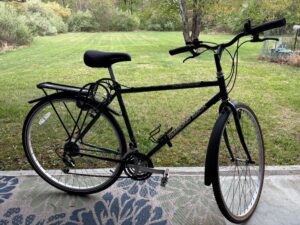
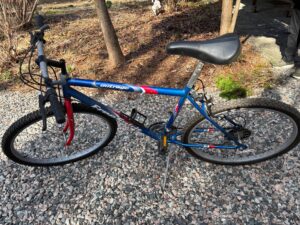
Once upon a time we had two bikes in the garage at our New Jersey house we came to on weekends. Since moving here full time eight years ago, we’ve dropped it to a single bike that is rusting in a shed. After promising myself for several years that I’d get a new bike and start riding around the country roads just outside our door, I finally did it! Luckily it’s a used bike in good condition that was given to me by some friends. I’d mentioned I was going to buy one, and they said they had two they never use. Voila! We both have new bicycles, and when the weather finally cooperates I’ll be seen gliding around the back roads with a helmet and a smile. Speaking of which, let’s take a look at some sage bike advice.
There’s no age limit on the open road — just a few things worth knowing before you roll.
Maybe you haven’t been on a bike for a while. Maybe you saw someone pedaling through the neighborhood on a crisp morning and thought, “I used to do that.” Or maybe your doctor mentioned low-impact cardio and your mind went straight to that bicycle sitting in the garage, tires soft, waiting.
Whatever brought you to this decision, welcome. Getting back on a bike or starting for the first time is one of the genuinely good decisions we can make for our bodies, our moods, and our sense of freedom. And the good news is that bikes, helmets, and the culture around recreational cycling have all gotten a lot more welcoming to older riders. We just need to know where to start.
FINDING THE RIGHT BIKE
The single most important thing we can do is get the right bike for our bodies and our goals. Riding the wrong bike is uncomfortable at best and discouraging at worst.
Step-through frames are your friend. Traditional bikes require you to swing your leg up and over a high top tube. That’s fine when you’re 30. It’s a recipe for a tumble when your hips have other opinions. Step-through frames, once called “women’s bikes,” though they belong to everyone, have a low or absent top tube, making it easy to get on and off. No gymnastics required.
-
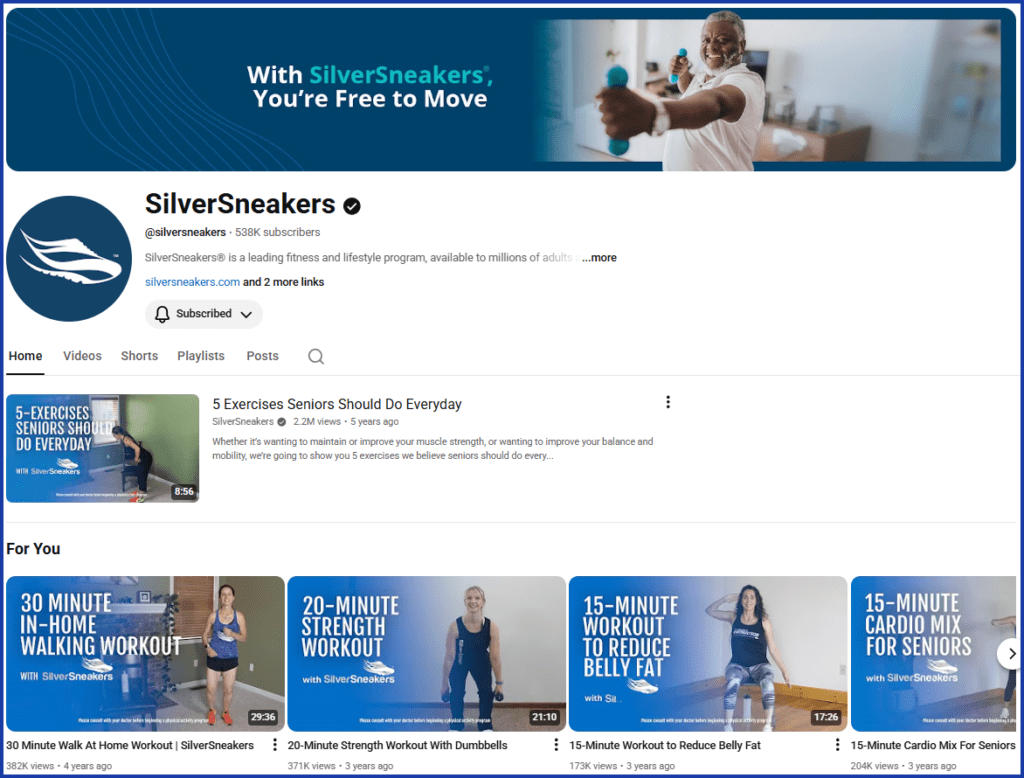
LGBT Senior’s Health Beat: SilverSneakers and the Power of Free Fitness on YouTube
LGBTSr’s Health Beat
If you’re 65 or older and looking for a safe, fun way to stay active, SilverSneakers might already be available to you, and you might not even know it. For my husband and I, we weren’t eligible a couple years ago when the local gym only offered it through Medicare Advantage plans (something we would never have). But recently it was offered through our Humana supplemental plan, so we joined. It’s great. Free gym membership in exchange for being a senior. Not my first choice as a tradeoff, but since I can’t get any younger I’ll take it.
SilverSneakers is a fitness and lifestyle program designed for older adults, and it’s available at no cost through select Medicare Advantage and some supplemental plans. That means if you have the right coverage, you could be joining live online classes or streaming workouts entirely for free.
Best of all? You don’t need a Medicare plan to get started. SilverSneakers has a YouTube channel with nearly 800 videos covering strength training, cardio, balance, and flexibility — one of the most generous free fitness resources online for older adults.
The workouts are led by instructors who understand aging bodies, and modifications are always offered so you can move at the level that’s right for you. Many use only a chair and light hand weights. Whether you’re a longtime gym-goer or just getting back on your feet, there’s something here for you.
-
LGBT Senior’s Health Beat: Spring Into It
By the LGBTSr blog team
I just got a bicycle, something I’ve been intending to do for several years. Luckily a friend and neighbor had one to give away, saving me the considerable cost of a new bike. My plan is to start slowly, riding up the road every day and extending the distance a little each time. Eventually I’ll be doing a few miles, and who knows from there? I want the cardio, and I love bike riding. Stay tuned for an update. – Mark
It’s warming up. Your body is ready. Here’s how to meet it where it is.
Something happens this time of year that no gym membership or fitness app can replicate. The days get longer. The air changes. The front door starts to look like an invitation instead of just an exit. For those of us who spent the winter months moving a little less and sitting a little more, spring is one of the best natural motivators there is — and all we have to do is not waste it.
Here’s how to make the most of it, sensibly and enjoyably.
Start slower than you think you need to.
This is the one everyone skips, and the one that matters most. After months of limited activity, muscles can lose strength and flexibility, so it’s important to ease back in rather than jump straight to your pre-winter routine. That enthusiasm you feel on the first warm Saturday of the year is real and good — just don’t let it write a check your knees can’t cash. A twenty-minute walk is a complete success. Build from there.
-
Health Beat: Why Emotional Well-Being Matters as Much as Physical Health
By Mark McNease
I confess: anxiety has been getting the best of me lately. While I prefer feeling busy, associating it with fulfilmment, I also have a bad habit of taking on too much. Part masochishm, part outrunning the passage of time, as if I have to get everything done today or I’ve failed in some way to meet my goals. And while I’m very good at taking naps on a daily basis, I’m not good at preventing the stress and anxiety in the first place. So let’s take a look at some causes and ways to address that knotted-up feeling pleading for our attention.
We’re very good at tracking the physical, espeically with watches, phones, alerts, step counters, calorie counters, and more alerts to remind us we must try harder. We know our blood pressure numbers. We discuss cholesterol. We schedule scans. We swallow vitamins medications, if we wakt them, with the consistency of a drill sargeant. But emotional health? That often gets the “I’m fine” treatment, as if fine were a medical diagnosis.
The truth is, emotional well-being matters just as much as physical health, and in many cases it quietly determines how well the rest of the body functions. You can’t separate the two. The body keeps score, even when the mind insists everything is under control.
Stress, especially the long-term kind, doesn’t simply pass through us. It settles in. It affects sleep (something I know too well). It tightens muscles. It disrupts digestion. It elevates blood pressure. Chronic stress raises cortisol levels, and over time that constant state of alert can wear down the immune system and strain the heart. We may call it “just life,” but the nervous system calls it an onslaught.
-
Health Beat: Sleep Changes with Age, and What Can Help
By Mark McNease
Another night, another wake up at 3:00 am. It doesn’t matter that we’re in California and it’s three hours ealier – the routine is the same. Having talked about this to many people my age, it seems like it’s just part of the changing sleep patterns that come with getting older. I’ve gotten use to it, but on those rare occasions when I wake up at 5:00 am, or even 4:30, it feels like I’ve slept late.
If you’ve experienced this same phenomenon you’re not imagining things, and you’re definitely not alone. As we get older, sleep often changes in frustrating ways. Falling asleep takes longer for many people, although that’s never a problem for me. I often drift off halfway through a TV show at 8:30 p.m., maybe 9:00 p.m., and consider it a win if I get six hours of sleep. Then I wake up at 3 a.m. for no clear reason and lie there thinking about an acceptable time to get out of bed. Being in bed awake in the middle of the night doesn’t work for me: I explain it as feeling the way I imagine a turtle on its back feels. I just want to get up. Nothing is quite as disturbing to my fragile peace of mind as imagining terrible things in the dark while I’m stranded on my back.
One of the most important things to understand is that sleep changes with age are normal, but chronic exhaustion, if that’s a result, is not something we have to accept. Our bodies produce less melatonin as we age, and our internal clocks tend to shift earlier. That means lighter sleep, more awakenings, and earlier mornings. Add in medications, aches and pains, hot flashes, anxiety, or sleep apnea, and it’s no wonder rest can feel elusive. (I’ve been using a CPAP machine for seven years, and it’s not weight-related, which many people assume.)
-
Health Beat: Redefining “Healthy” As We Age (Part 2)
Redefining health beyond weight, youth, and perfection
For most of our lives, “healthy” has been was defined for us by doctors, magazines, TV ads, and sometimes well-meaning relatives. It usually came packaged as a comment on our weight (up or down), the desire for a wrinkle-free face and body, or a public-facing appearance that looked young enough to pass inspection. As we age, that definition starts to crack.
Health at this stage of life is more about how we function, how we feel, and how we adapt. It’s being able to move through our day without pain, or a minimal amount of it. It’s having the energy to do the things that matter to us, whether that’s traveling, gardening, dancing, working, or simply enjoying time with people we want to be around.
It’s also about mental and emotional health, which doesn’t get nearly enough attention. Managing stress, sleeping decently, feeling connected, and having something that gives us a sense of purpose all matter just as much as blood pressure numbers.
Another big shift? Letting go of the idea that health is “all or nothing.” We can be managing a chronic condition and still be healthy. We can take medication daily (I do) and still be thriving. We can need naps – in my case nearly every afternoon – mobility aids, or extra recovery time and still be living well. Aging bodies change. That’s not failure, it’s biology.
-
Health Beat: Redefining “Healthy” As We Age (Part 1)
By Mark McNease
Week 2 — What Healthy Really Means as We Age
Retiring old attitudes and assumptions
“Healthy” has had a changing set of assumptions to it for a long time, but some of them persist regardless of what we learn about our bodies and minds: to be healthy is to be thin (that one’s never changed – see all the ads for GLP-1 drugs now), agile, sharp. Eating less of one thing, more of another. And for those of us over 60, we’ve had to endure the whole ‘aging gracefully’ requirement, as if getting older in whatever state we find ourselves is somehow distatesful. For me, there are a lot of things I want to be at this age. Kind, compassionate, energetic, creative, involved, but graceful is not on the list.
Health Is Not a Look
Health is not a number on a scale. It’s not how young you appear. And it’s definitely not perfection dressed up as “wellness.”
A lot of LGBTQ+ folks grew up learning how to monitor ourselves, our bodies, our behavior, our visibility, just to stay safe. Many of us still do, feeling out situations to determine how much of ourselves to reveal. Do we say “husband” and “wife,” or do we say “partner,” depending on any potential hostility we perceive? It’s not surprising that many of us internalized some harsh rules about what we were supposed to be, how we’re expected to present, and what version of healthy we fit.