-
The Twist Podcast 327: Supreme Disgrace, Met Gala Fail, and The Twist On a Hot Tin Room

Welcome to The Twist, episode 327. Mark and Rick take on the news from a crazy week, finger wag the Supreme Court, dish on the Met Gala, and reveal some unknown facts about Tennessee Williams.
-
This Week’s Survey: What Spring Moment Do You Most Enjoy?

Which spring moment do you most enjoy?
The first farmers/outdoor market of the season
Putting the heavy coats and clothes away till next time
That one perfect spring morning when everything smells like possibility
Seeing everyone outside again after a long winter
Name your own in the comments -
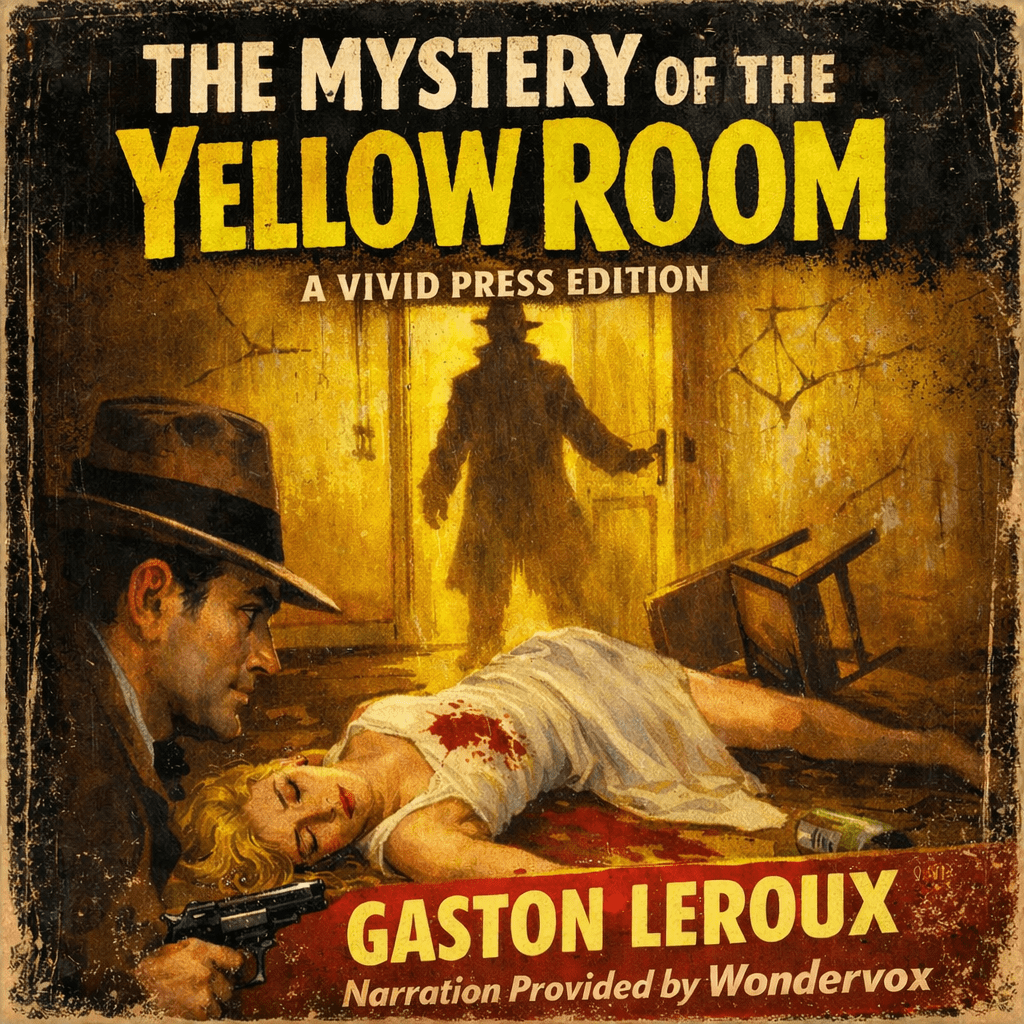
Mark McNease’s Fearsome Fiction Podcast: Genre Classic ‘The Mystery of the Yellow Room’ by Gaston Leroux (Chapters 14 – 29_)
Welcome to Fearsome Fiction, the podcast that brings you mysteries, thrillers, rare gems, and a weekly True Crime Tuesday.
Today we conclude our journey through one of the greatest locked-room mysteries ever written, with chapters 14 through 29. Published in 1907, Gaston Leroux’s The Mystery of the Yellow Room set the standard for a genre that would captivate readers for generations. A young woman is found brutally attacked inside a room locked from the inside. No one could have entered. No one could have escaped. And yet someone did both. Following the investigation is the brilliant young journalist and amateur detective Joseph Rouletabille — one of fiction’s most ingenious and overlooked heroes — as he unravels a mystery that seems to defy every law of logic and nature. Now for your listening pleasure, the remaining chapters of Gaston Leroux’s ‘The Mystery of the Yellow Room.’
-
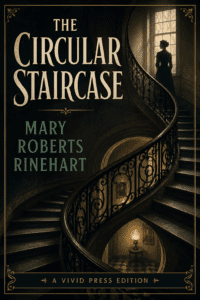
This Week’s Subscriber Giveaway: A Vivid Press Edition of Genre Classic ‘The Circular Staircase, by Mary Roberts Rinehard
The Circular Staircase by Mary Roberts Rinehard
A Vivid Press EditionSUBSRIBE AND DOWNLOAD YOUR FREE COPY
Welcome to another LGBTSr subscriber giveaway!
This is the story of how a middle-aged spinster lost her mind, deserted her domestic gods in the city, took a furnished house for the summer out of town, and found herself involved in one of those mysterious crimes that keep our newspapers and detective agencies happy and prosperous.
So begins one of the most entertaining and shrewdly constructed mysteries in American fiction.
Rachel Innes has no intention of playing detective. She simply wants a quiet summer at Sunnyside, a sprawling country house rented while its owners are away in California. But the first night brings strange sounds on the staircase. By the third, the servants have fled. And by the fourth, there is a dead man at the bottom of the circular staircase — a man her niece and nephew knew all too well.
What follows is murder, a vanished nephew, a bankrupt bank, hidden rooms, buried secrets, and a house that refuses to surrender its dead. Through it all, Rachel Innes — sharp-tongued, clear-eyed, and utterly unwilling to be frightened off her own lease — refuses to leave until she knows the truth.
First published in 1908, The Circular Staircase launched Mary Roberts Rinehart to national fame and sold over a million copies. It pioneered the “Had-I-But-Known” school of mystery writing, inspired the Broadway sensation The Bat, and gave Bob Kane one of the early sparks for Batman. At the peak of her popularity, Rinehart was more widely read than Agatha Christie.
She deserves to be read again.
A Vivid Press Annotated Edition of a Genre Classic vividpress.com
-
Mark McNease’s Fearsome Fiction Podcast: Night Flight to Murder Town, A Marshall James Thriller (Chapter 25 through 27)
Marshall James: Chapters Twenty-Five Through Twenty-Seven
Chapter Twenty-Five finds Marshall waking up in Leland’s apartment the morning after a drug-fueled night he remembers all too clearly. Filled with regret, he dresses, slips out, and returns to Trent Stoffer’s Upper East Side apartment — where he finds the place ransacked and Trent dead, bound and tortured in his bedroom. Knowing the police will eventually trace him to the scene, Marshall grabs a hidden computer disk from his suitcase and disappears into the New York morning — just as Carlton the doorman picks up the phone.
Chapter Twenty-Six steps out of the thriller’s timeline for a quieter moment, as Marshall and Boo walk the streets of Lambertville, taking in Bridge Street, the Brightside Diner, and the unhurried pace of small-town life. For the first time in a long time, Marshall feels something loosen. He begins to think Lambertville might be exactly the change he needs.
Chapter Twenty-Seven brings us back to the immediate crisis. With nowhere to go and the clock ticking, Marshall makes his way to the Big Cup coffee shop in Chelsea, where he encounters Colin — a young, sharp-eyed escort with a gift for reading people. Out of options and running on fumes, Marshall accepts Colin’s offer of a couch and a few hours of sleep, knowing he’s going to have to tell someone the truth very soon.
-
On the Map with LGBT Senior: Visiting the Morris Arboretum in Philadelphia
On the Map with LGBT Senior: Visiting the Morris Arboretum in Philadelphia
By Mark McNeaseWe’d planned the trip for weeks and hoped the weather and circumstances would cooperate. They often don’t — plans with friends, a little back and forth, someone checks the weather, someone else checks the drive. But yesterday we made it happen, and it was the perfect day for it. Frank and I, Doris and Beth, all tucked into the RAV and off to the Morris Arboretum in Chestnut Hill. The town is in Northwest Philadelphia and less than a drive away. What we found there was one of those places that comforts you with its beauty and its quiet. Read more about it, and enjoy the photos! – Mark
A Victorian Estate Turned Public Treasure
The Morris Arboretum began as the private estate of siblings John T. Morris and Lydia T. Morris, who purchased and began landscaping the property in 1887. Both were world travelers with a genuine passion for plants, and they spent decades transforming their summer home into something extraordinary. When Lydia died in 1932, she left the estate to the University of Pennsylvania with instructions that it become a public arboretum. Today it serves as Pennsylvania’s official state arboretum — a fact that somehow feels both surprising and entirely fitting once you’re walking the grounds.
The arboretum contains more than 11,000 labeled plants of over 2,500 taxa, representing the temperate floras of North America, Asia, and Europe. But the numbers don’t prepare you for the feeling of the place — the winding paths, the canopy overhead, the sudden surprise of a Japanese garden or a classical fountain around a bend you didn’t expect.
-
LGBT Senior’s News on the Positive Side with Cora Berke
Cora Berke News on the PositiveSide
By Cora Berke“Rights are won only by those who make their voices heard.”- Harvey Milk
The State of Georgia closed out their 2026 legislative session with a big win for the LGBTQ+ community. After a long night under the gold dome of Georgia’s Capitol Building in Atlanta, all of the proposed anti-LGBTQ+ bills were defeated.
Jeff Graham, Executive Director for Georiga Equality said, “Despite state leadership fixating on restricting LGBTQ+ rights as their core priority over the past years, we made it clear that scapegoating LGBTQ+ Georgians is not a winning political strategy.” He added that, “We could not be more excited to share that we did it! Thousands of Georgians from over 60 counties came together to successfully defeat each one.”
Georgia Equality was founded in 1995 and became the state’s largest advocacy organization in the State for the LGBTQ+ community. In 1998, Svannah formed their own chapter.
Since its inception, they have fought tirelessly for equal rights. This year, to defeat the proposed bills in the legislature, they made over 7,000 phone calls to constituents in all key districts. Georgia Equality also held advocacy training sessions and partner sponsored lobby events.
-
A Book Reading with Authors Mark McNease and Kim Cook, Lambertville, May 3 (Video Excerpt)
On May 3rd, 2026, in Lambertville, New Jersey, two authors came together for an afternoon of storytelling, craft, and memoir. Mark McNease shared excerpts from Blank Page to Bookshelf: From First Sentence to First Sale — his guide to fiction writing, character creation, and self-publishing — and Kim Cook shared from her powerful memoir, I Am My Father’s Child: A True Story of History, Mystery, Betrayal, and Forgiveness. Keep watching for a video excerpt from that event.
-
True Crime Tuesdays – A Fearsome Fiction Feature: The Black Dahlia
True Crime Tuesdays – A Fearsome Fiction Podcast Feature: The Black Dahlia
Welcome to True Crime Tuesdays. I’ll be sharing a true crime story every Tuesday on Mark McNease’s Fearsome Fiction Podcast. Narration is provided by my own Wondervox. Fasten your headphones for one of the most famous unsolved murders in the annals of American crime – or is it American madness?
They found her on the morning of January 15th, 1947.
A woman walking with her daughter through a vacant lot in the Leimert Park neighborhood of Los Angeles. She thought at first that what she was seeing was a discarded department store mannequin. A broken one, in two pieces.
It wasn’t a mannequin.
The body had been completely severed at the waist. Drained of blood. Cleaned. Posed with a precision that suggested not rage — but ritual. Her face had been slashed at the corners of the mouth, cutting what investigators would describe as a grotesque grin from ear to ear.
She was twenty-two years old. Her name was Elizabeth Short.
The press would call her the Black Dahlia — a name she never knew in life, but one that would outlast everything else about her.
-
Mark McNease’s Fearsome Fiction Podcast: Genre Classic ‘The Mystery of the Yellow Room’ by Gaston Leroux (Chapters 11 – 13)
Welcome to Fearsome Fiction, the podcast that brings you mysteries, thrillers, rare gems, and a weekly True Crime Tuesday.
Today we continue our journey through one of the greatest locked-room mysteries ever written. Published in 1907, Gaston Leroux’s The Mystery of the Yellow Room set the standard for a genre that would captivate readers for generations. A young woman is found brutally attacked inside a room locked from the inside. No one could have entered. No one could have escaped. And yet someone did both. Following the investigation is the brilliant young journalist and amateur detective Joseph Rouletabille — one of fiction’s most ingenious and overlooked heroes — as he unravels a mystery that seems to defy every law of logic and nature. Now for your listening pleasure, another three chapters of Gaston Leroux’s ‘The Mystery of the Yellow Room.’