-
On the Map: Another Cruise Adventure – Royal Caribbean’s Independence of the Seas
Setting Sail from Bayonne
We have three days left on the cruise but I wanted to get this up while I’m still on the ship. – Mark
Some vacations start at an airport gate, and others avoid the hassles of flying altogether. This time had had both.
We live in New Jersey, and whenever we can, we leave from Cape Liberty in Bayonne. It’s only an hour’s drive from our house, so we just ride to the pier with a neighbor we pay to take us there, and walk aboard. Within a few hours we’re checked into our cabin and staring on another cruise adventure—on of my favorite ways to vacation.
Life Aboard “:Indy”:
Regulars call Independence of the Seas “:Indy,” although this was our first time aboard. 2018 she became the first ship in Royal Caribbean’s Royal Amplified program, a multimillion-dollar makeover that loaded her with new features, dining, and entertainment. Sea days aren’t downtime on the ship, although I noticed the daily offerings are as repetitive as they were plentiful. That’s okay, since we didn’t do most of them. Some of the things the ship offers:
- Make a splash. The Perfect Storm has two racing waterslides, Typhoon and Cyclone. Next door, the FlowRider surf simulator lets you try boogie boarding or stand-up surfing, usually to plenty of applause (and some spectacular wipeouts).
- Bounce above the waves. Sky Pad is a bungee trampoline you ride while wearing virtual reality goggles, high on the stern. It’s one of the most unusual things you can do at sea.
- Play games. There’s glow-in-the-dark laser tag, an escape room called The Observatorium, the rock-climbing wall, and Playmakers Sports Bar & Arcade for watching the game back home.
- Stroll the Royal Promenade. This indoor main street runs through the middle of the ship, with cafés, shops, bars, and Sugar Beach, a candy store that’s dangerous for anyone with a sweet tooth.
- Eat, then eat again. The Windjammer buffet, Sorrento’s Pizza, and Café Promenade are all included, and specialty restaurants are there for a splurge night.
- Make a night of it. Once the sun goes down, the ship comes alive with Broadway-style shows, live music, comedy, the casino, and a deck party or two under the stars.
And if you’d rather do none of that, that’s fine too. A lounge chair, a good book, and the endless blue view from the pool deck might be what you’re looking for. I personally love sea days and doing nothing, or close to it.
-
Gifts That Don’t Break the Bank: Budget-Friendly Ideas for the Holidays and Beyond

The best gift you give this year may cost you almost nothing. Ask most of us over 60 what we remember from holidays past and it won’t be the price tag. It’ll be the person who showed up, the pie that came out of someone’s oven, the note tucked into a card.
That’s good news for anyone living on Social Security, a small pension, or savings that have to stretch. Gift season comes with a lot of pressure to spend, and plenty of us feel it. You don’t have to give in to it. Here are some ideas that cost little or nothing and still say what you mean.
Cook for Them
A home-cooked dinner is one of the most generous gifts there is, and a pot of soup or a pan of lasagna costs far less than a restaurant meal. Invite a friend over, or bring the meal to them. For someone who lives alone, a dinner they didn’t have to plan or cook is a real treat.
A few more ideas from the kitchen:
- Baked goods. A loaf of banana bread or a tin of cookies, wrapped in a clean dish towel tied with ribbon.
- Food in a jar. Layer the dry ingredients for cookies or soup in a mason jar and tie the recipe to the lid.
- Freezer meals. Two or three single portions labeled with the date, for the friend who’s recovering from surgery or just tired of cooking for one.
- A potluck. Host a holiday get-together where everyone brings a dish. The gathering is the gift, and no one carries the whole cost.
-
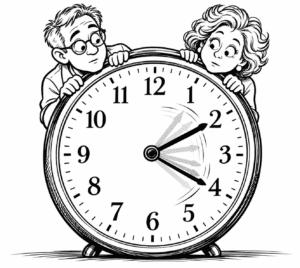
This Week’s Journaling Theme: It’s About Time

It’s About Time
We measure time in calendars and clocks, but we live it in moments: the smell of a kitchen, a voice on the phone, the way light shifts in the course of a day. This theme asks you to look at time not as something that slips away, but as something you’ve been gathering all along.
- The Story In Your Hands
Take a few moments and look at your hands. Notice the lines, the knuckles, any scars, spots, or rings. Then write about what these hands have done over the years: the work, the people they’ve held, the things they’ve built or let go of. What story of your life do your hands tell?
- The People Who Marked Time
Some people mark the chapters of our lives: the friend from a certain decade, the neighbor who was always there, the person we lost too soon. Write about one of them and the stretch of time they belong to. How does remembering them bring that time back?
- Small Rituals, Long Years
Think of a habit or ritual you’ve kept for years: morning coffee, a holiday tradition, a walk, a phone call every Sunday. Trace it back to its beginning. How has it changed as you’ve changed, and what does it hold for you now?
- The Age I Am
Write honestly about the age you are today. What does it feel like from the inside? What do you know now that only time could teach you, and what are you still learning?
-
‘Devil’s Wood’ Reading at Read Mill Books in Clinton, NJ
On a recent afternoon at Read Mill Books in Clinton, New Jersey, the story was told of a cursed walking stick and the lives it has destroyed, as it tries once again to ruin a man and all he holds dear. Mark McNease’s supernatural chiller, Devil’s Wood, held an audience’s attention with chills, mystery, and the ancient battle between good and evil. Read it to find out which one wins.
-
New from Your Write Path: Your Life, Your Story, Your Legacy
Your Life, Your Story, Your Legacy
Every life holds a story worth keeping, and too many are lost because we didn’t write them down. With Life Writing, I help people turn their memories into a finished book their families can hold, share, and pass down for generations.
After facilitating journaling and writing workshops for the past three years, I’m now offering to help you get your legacy down on paper. If you’d like to include photos, audio of you own narration, and even video, consider reaching out.
As a two-time Emmy Award–winning writer, author of fifteen novels, and a Certified Guided Autobiography Instructor, I’ve spent my career shaping stories. I’m still an author, still a workshop guide, and still here for whatever you’d like to accomplish.
From First Idea to Finished Book
With patience and time, listening carefully to what you want, I’ll guide you through every step:
- Finding your story. Together we explore the memories, people, and turning points that matter most, and uncover the themes that tie your life together.
- Building the outline. We shape those memories into a clear structure, so the project feels manageable instead of overwhelming.
- Writing it down. Write it yourself with my coaching and feedback, or let me help draft it from our conversations, in your voice.
- Editing and polishing. Careful editing makes your story read smoothly while keeping it unmistakably yours.
- Creating the book. I’m able to handle design, cover, and publishing through my own imprint, so you end with a real, professionally printed book, whether you want 10 copies or 50. It’s your story, and your choice.
Whether you want to preserve family history, share hard-won lessons, or simply make sense of the road you’ve traveled, you don’t have to do it alone. Your life is a story, and you’re the storyteller.
Let’s Begin
Contact me through through Your Write Path to talk about your legacy book.
-
Gift Certificates for Your Write Path – $40 Any Workshop
Every life is a story, and each of us is the storyteller.
Give someone you care about time, space, and community. This $40 gift certificate can be used toward any Your Write Path workshop, including fiction writing, character creation, self-publishing, journaling and more, in person or online over Zoom.
Your Write Path workshops are warm, welcoming, and built for writers at every level. It’s a meaningful gift for birthdays, holidays, retirements, or anyone who has ever said, “I’ve always wanted to write.” From the essentials of writing fiction, to character creation and self-publishing, to life writing and journaling, these workshops are for anyone with a desire to explore and express themselves through writing.
You’ll receive a downloadable PDF of the certificate with purchase. When redeeming, specify which workshop it’s for. Purchaser will receive confirmation from Mark at Your Write Path.
-
The Twist 340: America’s Cornell Crisis, and a Review of Ann Cleeves’ Newest Matthew Venn Mystery
Join Mark and Rick for a retooled Twist as we talk about Cornell and America’s peak assault culture, catch up with happenings and news, and hear a review of Ann Cleeves’ newest, ‘The Dying Light.’
-
Savvy Senior:
Planning a Simple, Affordable Funeral
Dear Savvy Senior,
I’d like to make my end-of-life arrangements, but I want to keep things simple and affordable. What are my options?
–86-Year-Old
Dear 86,
Smart thinking! Planning ahead can save your loved ones a lot of stress, and money. With a traditional burial averaging around $10,000 and a full-service cremation near $6,500, it’s easy to see why many seniors are looking for simpler, lower-cost ways to say goodbye.
The good news is, there are plenty of options that are dignified, straightforward, and much easier on your wallet. Here’s a look at some choices, depending on the kind of farewell you want.
Direct cremation
If cremation appeals to you, a direct cremation is the simplest – and usually the least expensive – option. It includes picking up the body, completing the required paperwork, the cremation itself, and returning the ashes to your family. There’s no embalming, formal viewing, or casket; a simple cardboard box called an “alternative container” is used to hold the remains.
Depending on where you live and which provider you choose, direct cremation typically costs $700 to $3,500. If you want extra services, ask for an itemized price list so you know exactly what you’re paying for. Funeral homes are required by law to provide this.
-
Around the House: Should You Move Now, or Stay Put?
The passing of time makes many things more pressing, and that includes where we want to spend most, if not the rest, of our lives.
It’s almost October – again! Every month seems like it’s come back around faster and faster as the years pass. Holidays, too. Didn’t we just take the Christmas tree down?
The passing of time makes many things more pressing, and that includes where we want to spend most, if not the rest, of our lives. We live in a small house in the woods in rural New Jersey, not far from Lambertville and New Hope (PA), but six miles from a town. We’ve talked for several years about moving to a place where we could walk to a coffee shop, and have next door neighbors, and see people walking into town. More importanntly, it’s a small house on 26 acres of wooded land. It was a one-room house when it was built long ago, and it’s just not good for two aging men. Rickety stairs to the basement where the laundry machine is. One bedroom, with a makeshift guest room in the A-frame attic. Two cats. No writing room for me!
I keep saying now is the time to get serious about moving. I’ll be 68 in October, and I know I’ll have no desire to move when I’m 80. I also want to find a new house while we’re still at an age to really enjoy it. Decorating. Gardening. Make it special. And enjoying it for more than a few years before that whole assisted-living thing becomes a consideration.
And I think the time has come. Hopefully a year from now we’ll either be moved, or in the proccess of moving. So what are the things to consider as so many of us find ourselves at this crossroads?
When is the right time?
There’s no magic birthday. But there are signs. The stairs that used to be nothing are now something. The yard that was a pleasure is now a chore list. The house has rooms nobody goes into except to dust them (or not enough rooms at all). Maybe you’ve outgrown the place, or the neighborhood has changed around you, and home doesn’t feel like home anymore.
-
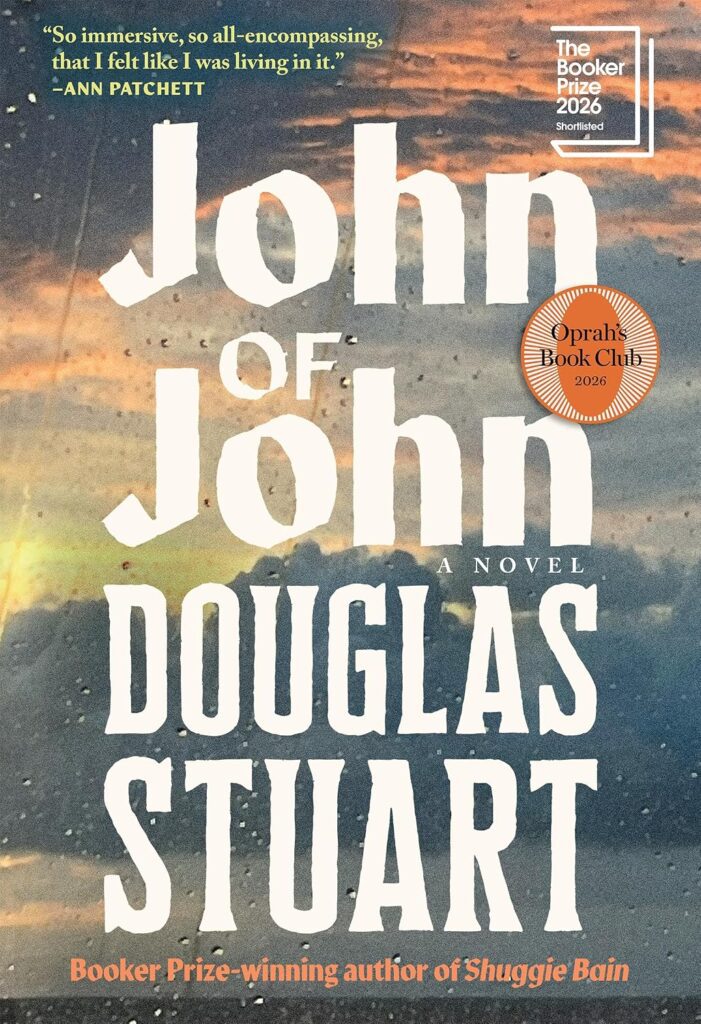
From the Book Bin: Douglas Stuart’s Quitely Devastating ‘John of John’
Book Review: John of John by Douglas Stuart
A story about fathers and sons, faith and shame, and the long silences that can pass for peace.
Douglas Stuart’s first two novels lived in the tenements of 1980s Glasgow. His third takes the ferry west, to the Isle of Harris in the Outer Hebrides in the late 1990s. It’s a quieter book than Shuggie Bain or Young Mungo, and in many ways a braver one.
Cal Macleod is 22, fresh out of art college in Edinburgh, and broke. Twice on Sundays and once on Wednesdays, he waits at a phone box for his father to call from Harris and sing the day’s Gaelic psalm, expecting Cal to sing it back. They don’t talk much. John mentions that Cal’s grandmother hasn’t been well; Cal keeps quiet about the men he’s sleeping with.
So Cal goes home to the croft where John raises sheep and weaves tweed. His grandmother, Ella—a Glaswegian who refuses to speak Gaelic and holds on to her profanity-laced English—turns out to be fairly vigorous, and the summons serves another purpose. On the crossing, an elderly passenger asks Cal who he belongs to, and he recites his lineage: “John of John of Ian of Ian the Breabadair.” Breabadair means weaver. On this island, you are who your father was.
The friction arrives on schedule. John is a deacon in a church that still shames backsliders in public and chains up the swings on the Sabbath. Cal has dyed his long hair, wears torn jeans, and has no interest in joining the elect in the front pews. John raises his hand to him. Cal answers a “Men Seeking Men” ad in the newspaper.